
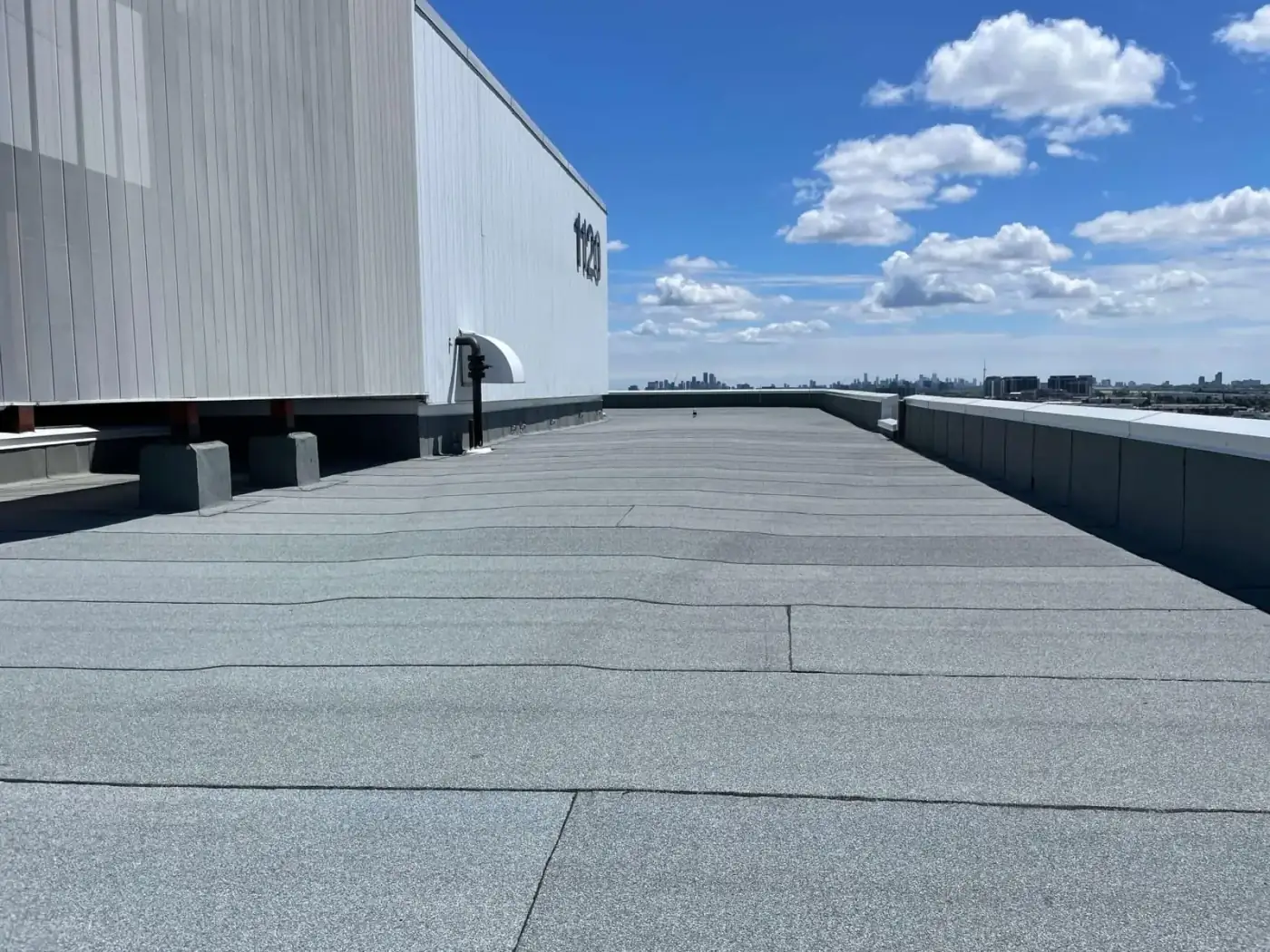
McAllen's multifamily housing market occupies a unique position in the Texas real estate landscape, a rapidly growing Rio Grande Valley metro where population expansion driven by cross-border commerce, healthcare sector growth, and regional retail has created sustained demand for apartment inventory across a wide income spectrum. Property managers overseeing complexes in neighborhoods from the established central district to the newer developments expanding along Expressway 83 toward Edinburg contend with a climate that punishes roofing systems in ways entirely different from most of the country. McAllen averages over 200 days of intense UV exposure annually, summer temperatures that routinely push flat roof surface temperatures past 150 degrees Fahrenheit, and seasonal severe weather events that can deliver damaging hail, tornado-force winds, and flash flooding within hours.
The apartment building stock in McAllen reflects several distinct eras of construction. Garden-style complexes built in the 1980s and early 1990s, many clustered around Nolana Avenue and the areas south of Business 83, were frequently topped with modified bitumen or built-up roofing systems that performed adequately for a decade or two but are now well beyond their intended service life. These aging membranes show the characteristic surface granule loss, alligatoring, and exposed felts that signal imminent failure, and their drainage geometry often reflects decades of informal patching that has altered original slope-to-drain pathways. For the property management companies running these older portfolios, the choice is increasingly between continued emergency repairs that erode NOI or a capital investment in full replacement that resets the clock for 20 to 25 years.
Real estate investors active in the McAllen multifamily market, many of whom are deploying capital from Texas's major metro markets where cap rates have compressed significantly, frequently underestimate Rio Grande Valley roofing conditions when evaluating acquisition targets. The thermal cycling that a flat roof endures in McAllen is extreme: surface temperatures swing from overnight lows in the 50s during December cold fronts to midday highs exceeding 150 degrees in July, creating expansion and contraction stresses that stress membrane seams and flashings across thousands of cycles over a system's life. Investors who budget a flat per-unit allowance for roof reserve without accounting for the climate severity and existing system condition may find themselves facing full replacement costs within the first few years of ownership.
HOA-managed communities in McAllen's newer suburban developments, the master-planned neighborhoods spreading toward Palmview and Mission, present their own roofing management challenges. These communities often include both single-family homes and multifamily townhome clusters under the same HOA umbrella, with the townhome buildings sharing flat or low-slope roofing systems that are HOA-maintained while the single-family portions have individually maintained pitched roofs. When a hailstorm moves across Hidalgo County, as several significant events have in recent years, the HOA must manage simultaneous insurance claims across multiple building types, coordinate with adjusters who may be unfamiliar with the specific systems involved, and select contractors who can handle both the flat commercial-style work on the townhomes and the steep-slope work on the detached homes.
The hail risk in South Texas is a factor that every multifamily property owner in McAllen must treat seriously. The region sits in a corridor of elevated hail frequency driven by Gulf moisture and instability patterns that produce large-diameter hailstones capable of penetrating modified bitumen membranes, destroying TPO lap seams, and fracturing the granule surfaces of cap sheets in a single storm event. Property managers who document pre-storm roof conditions with photos and who maintain records of prior inspections and repairs are significantly better positioned when filing post-event insurance claims than those who approach the claim process reactively without baseline documentation.
Flat roofs on McAllen apartment complexes face another challenge unique to the regional climate: the combination of intense heat and standing water following the heavy summer rains that the Valley receives. When drainage infrastructure is inadequate, clogged drains, insufficient slope, or undersized scuppers, water ponds on the membrane surface for extended periods. The bacteria and biological growth that colonize ponding areas on super-heated membrane surfaces accelerate degradation in ways that don't occur in cooler climates. Specifying adequate drainage geometry, installing redundant overflow scuppers, and maintaining drain strainers as part of a routine maintenance program are essential disciplines for multifamily operators in McAllen that extend membrane life meaningfully.
New multifamily construction in the McAllen metropolitan area, particularly the larger apartment communities of, benefits from the option to specify cool-roof compliant systems that reduce building energy loads. White TPO and PVC membranes with high solar reflectance ratings can reduce rooftop surface temperatures by 40 to 50 degrees compared to dark-surface alternatives, translating directly into lower HVAC energy consumption on the top floor units that experience the greatest heat gain. For property managers and investors who track operating expenses closely, the energy cost difference between a cool-roof system and a standard dark membrane on a large McAllen apartment complex justifies meaningful additional investment in the roofing specification.
Bilingual project communication is a practical consideration for commercial roofing work on McAllen apartment complexes, not just for crew coordination but for communicating with tenants about project timelines, noise and parking impacts, and temporary access restrictions. Property managers overseeing communities with high proportions of Spanish-speaking residents benefit from working with contractors whose project management team communicates effectively in both languages, reducing the misunderstandings that can lead to tenant complaints, lease non-renewals, and negative online reviews during what is already a disruptive renovation period.
For McAllen apartment complex owners and property management firms, the most important roof-related decision is the timing of replacement relative to system condition. The region's climate accelerates deterioration, meaning a system showing early failure signs in McAllen's heat will decline faster than the same system would in a more temperate environment. Getting ahead of system failure with a planned replacement, backed by accurate condition assessment, proper material specification for South Texas climate demands, and a contractor with documented multifamily experience in the Valley, protects asset value, keeps insurance coverage intact, and avoids the tenant-facing disruption and interior damage costs that come with emergency roof failures on occupied apartment buildings.
What we document
For Multifamily and Apartment Building Roofing, we record field photos, roof observations, moisture concerns, access assumptions, excluded conditions, and the owner decision that moves the work forward.