
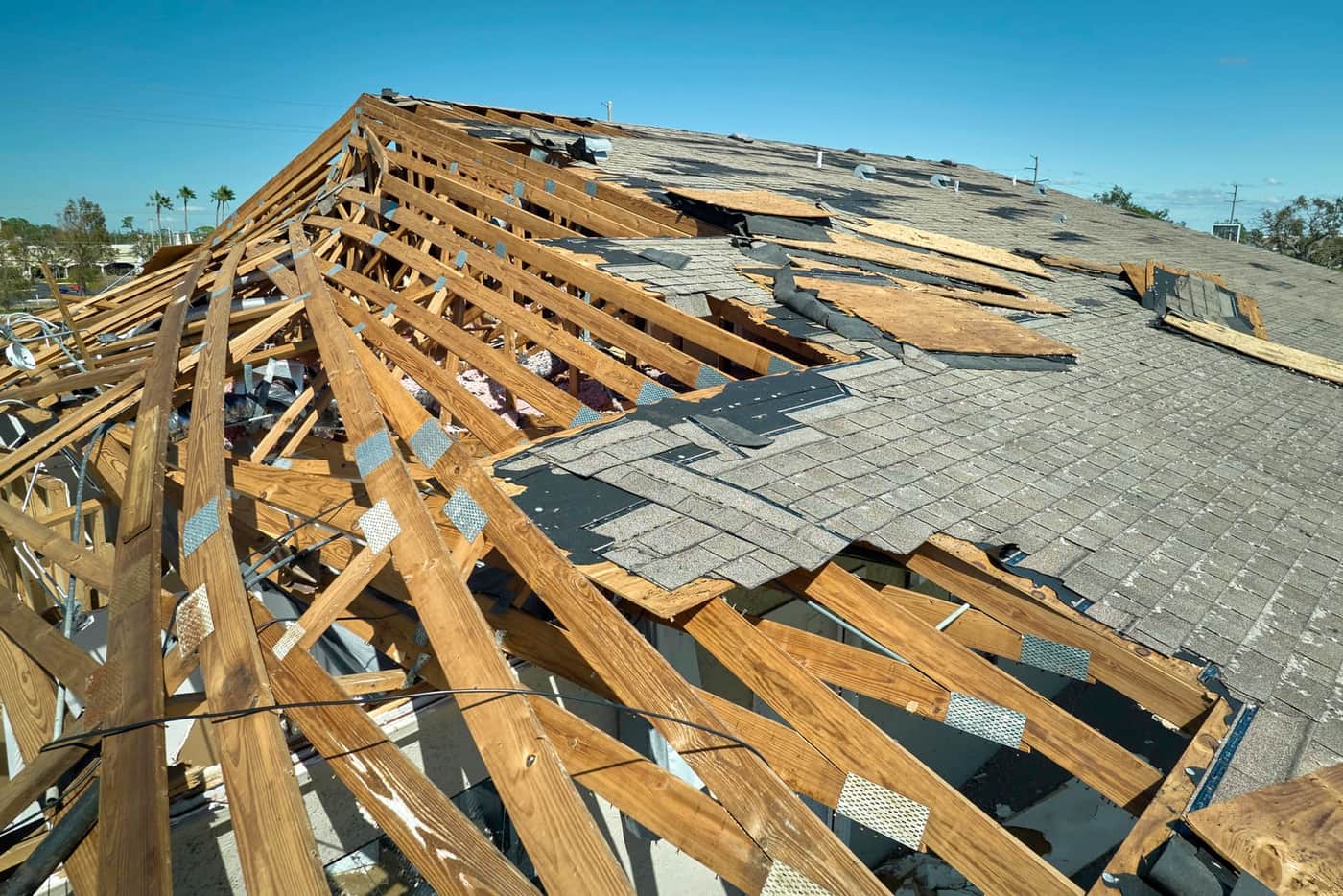
Most of the wind damage we see on McAllen commercial roofs doesn't come from a named storm at all, it comes from the fast-moving severe thunderstorms that build over the Valley through spring and summer. A line of storms can put down straight-line wind gusts strong enough to lift edge metal, peel back a section of membrane, or drive debris into a rooftop unit, and it's over in twenty minutes. Getting an accurate insurance file on that kind of damage means documenting it before the next storm erases the evidence.
We're your roofing contractor, not a public adjuster, we document and substantiate the roof damage so you and your adjuster work from an accurate scope.
Separating Storm Damage From Heat and UV Wear
This is the part of a wind or storm claim that gets contested most often, and it's the reason we treat it as its own documentation step. South Texas heat and near-constant UV exposure age a roof membrane over time, brittle seams, surface cracking, granule loss on a cap sheet, chalking on a coating, and that gradual wear can look similar to storm damage if it isn't examined closely. We document the difference: a fresh tear with a clean edge and a wind-consistent direction reads differently than a stress crack that developed slowly across a heat-aged seam. That distinction is often what determines whether a specific area of damage gets covered as a storm loss or treated as maintenance-related wear, so we're careful to document both the storm damage and the surrounding roof condition honestly.
What a Straight-Line Wind Event Typically Damages
On low-slope commercial roofs we most often find damage at the perimeter and at penetrations: lifted or torn edge metal, loosened coping, membrane pulled loose at a parapet transition, and rooftop units knocked off their curb seal or shifted enough to break the flashing. Metal roofs show different signs, panel oil-canning, popped fasteners, or a panel edge that's been peeled back at a ridge or eave. We photograph and measure every affected area and note whether flashing, fasteners, or the membrane itself failed first, since that sequence matters for the repair scope.
Timing the Inspection to the Storm
We log the inspection date against the storm date whenever we can confirm it, and we note weather conditions at the time of our visit. For buildings that took a direct hit from a thunderstorm outflow or a brief tornado spin-up, that timing record is often the clearest evidence tying the damage to a specific event rather than to gradual wear.
Writing the Repair Scope
Once the damage is documented, we write a scope that separates true storm repair from any pre-existing condition we found during the same inspection, and we say so plainly in the report. An owner is better served by an accurate picture, what the storm caused, and what was already there, than by a claim that blurs the two and risks getting challenged later.
Recurring Storm Cells and Repeat Claims
Some McAllen properties end up filing more than one wind claim in a season, since severe cells can track through the same part of the Valley multiple times between spring and fall. When that happens, we keep each event's documentation separate by date, even on the same roof, so a repeat claim doesn't get confused with damage that was already repaired or already claimed under an earlier event.
What we document
Wind-pattern damage at edges, penetrations, and rooftop equipment; a clear comparison between storm damage and heat/UV wear; and a repair scope broken out by cause.
Frequently Asked Questions
How do you tell storm damage from normal roof aging?
We look at the shape and location of the damage. Fresh wind damage tends to show clean tears, lifted laps, or displaced flashing concentrated at edges and penetrations. Heat and UV wear shows up as gradual seam brittleness, chalking, or granule loss spread more evenly across the field, and we document both separately.
Does McAllen get enough severe wind to damage commercial roofs?
Yes. Fast-moving spring and summer thunderstorms regularly produce straight-line wind gusts strong enough to lift edge metal, damage rooftop units, and tear membrane, even without a named storm involved.
What should we do right after a wind event damages the roof?
Get temporary protection on any active leak or exposed area, then get the roof inspected and photographed as soon as possible so the damage is documented before weather or roof traffic changes it.
Will the insurance company deduct for the roof's age?
Depreciation and age-related adjustments depend on your specific policy. We document the actual condition we find, storm-related and otherwise, so you and your adjuster are working from accurate information when that's calculated.
Can a single storm claim cover more than one type of damage?
Yes, and it's common. A single wind event can lift edge metal, damage a curb flashing, and knock a rooftop unit off its seal all in one visit. We document each affected area separately within the same inspection and scope.